Monday, 14 November 2016
Training: calmness is good
I have found the fastest progress is made with a horse that is calm. I recently read that horses (and people) do not learn when in flight mode. (November's Dressaage Today article on dealing with stress). It is also the safest for the people involved too.
A horse will not be calm at the beginning of training or when training something new so I have found it is best to go slowly: baby steps. Ask for a little, praise a lot and go do something the horse can do easily. That might be standing, or letting go for a wander. Food helps to relax a horse.
You can tell the horse is tense by the ears: moving lots, not moving, pricked with the head up, and by the horse is moving. The tenser the horse gets the stiffer and slower/shorter the steps. This is a good time to stop and get the hrose more relaxed. Using your aids stronger will not help the situation. Stoking, treat helps. Back down. The more time you give the horse to figure out what you want in the beginning the faster his progress will be. The better you are as a trainer, the less tense your horse will be. (if you can "read" the horse, then you will know sooner).
Tenseness will result in the horse getting rid of the problem at some point.
Signs of Tension are
tight tail (clamped or not swinging)
kink in tail
tail curled to one side shows tenseness on that side
head up
ears not relaxed
looking back at the rider
running off
bucking, rearing
refusing to move
slowing down
short steps (because the head is up)
swishing tail
shorter steps than usual
Signs of Relaxation
tail swinging
head and neck down (around withers level or above)
chewing on the bit quietly
foam a the bit (like lipstick)
ears at half mast
moving to front, back, side
one ear on the lunger or rider is always good
no wrinkles above the eye
The horse does not have to master a lesson before you move on to the next. An introduction is good, then go back to it the next time all is good, and you should find the horse does a little more. You want a little or what the horse offers. In the beginning the horse will not have a clue what you are asking for. So accept a little and then back off. Leave it.
A rule of thumb is to repeat three times. Then leave it and come back another time. Don't keep asking for something. The horse does not know what it is you want.
The horse is not wrong. You are wrong. Horses do not have a right and wrong. If you are not getting what you are asking for then stop asking and figure out what you are doing wrong. If you were doing it right the horse would do it.
Start on the ground, then on the horse's back with the ground person controlling, then gradually the rider takes over. This is fast, and does not cause tension because changes are gradual.
If you teach the horse to buck, tense up, rear, bolt then the horse will use those to to deal with tension at a later time. So take your time.
Training sessions should be short. End on a good note. Do not go onto something else. Just stop. Sessions will gradually get longer as the horse learns more. The learning portion will stay short.
The horse will revert to what first learned. If all was calm then the horse will revert to calm. If the horse learned through fear and tension then the horse will tense up and have anxiety when something new comes up.
Just some thoughts on training I have learned over the years
A horse will not be calm at the beginning of training or when training something new so I have found it is best to go slowly: baby steps. Ask for a little, praise a lot and go do something the horse can do easily. That might be standing, or letting go for a wander. Food helps to relax a horse.
You can tell the horse is tense by the ears: moving lots, not moving, pricked with the head up, and by the horse is moving. The tenser the horse gets the stiffer and slower/shorter the steps. This is a good time to stop and get the hrose more relaxed. Using your aids stronger will not help the situation. Stoking, treat helps. Back down. The more time you give the horse to figure out what you want in the beginning the faster his progress will be. The better you are as a trainer, the less tense your horse will be. (if you can "read" the horse, then you will know sooner).
Tenseness will result in the horse getting rid of the problem at some point.
Signs of Tension are
tight tail (clamped or not swinging)
kink in tail
tail curled to one side shows tenseness on that side
head up
ears not relaxed
looking back at the rider
running off
bucking, rearing
refusing to move
slowing down
short steps (because the head is up)
swishing tail
shorter steps than usual
Signs of Relaxation
tail swinging
head and neck down (around withers level or above)
chewing on the bit quietly
foam a the bit (like lipstick)
ears at half mast
moving to front, back, side
one ear on the lunger or rider is always good
no wrinkles above the eye
The horse does not have to master a lesson before you move on to the next. An introduction is good, then go back to it the next time all is good, and you should find the horse does a little more. You want a little or what the horse offers. In the beginning the horse will not have a clue what you are asking for. So accept a little and then back off. Leave it.
A rule of thumb is to repeat three times. Then leave it and come back another time. Don't keep asking for something. The horse does not know what it is you want.
The horse is not wrong. You are wrong. Horses do not have a right and wrong. If you are not getting what you are asking for then stop asking and figure out what you are doing wrong. If you were doing it right the horse would do it.
Start on the ground, then on the horse's back with the ground person controlling, then gradually the rider takes over. This is fast, and does not cause tension because changes are gradual.
If you teach the horse to buck, tense up, rear, bolt then the horse will use those to to deal with tension at a later time. So take your time.
Training sessions should be short. End on a good note. Do not go onto something else. Just stop. Sessions will gradually get longer as the horse learns more. The learning portion will stay short.
The horse will revert to what first learned. If all was calm then the horse will revert to calm. If the horse learned through fear and tension then the horse will tense up and have anxiety when something new comes up.
Just some thoughts on training I have learned over the years
more information
TRTmethod.com. Tristan Tucker. on YouTube also
"Unleashing Harmony:The Man Who Dances With Horses" on Slice Wild on YouTube. (Frederik Pignon)
November"s thoughts
The weather is still mild. It is almost 5ยบ this morning. It did freeze last night for the first time in weeks.
The manure pile is almost all spread on the fields. Hopefully there will be grass growing in the spring as a result. It is going onto the South Field.
I have decided to make signs for the fields. I found some nice plywood that would make good signage material.
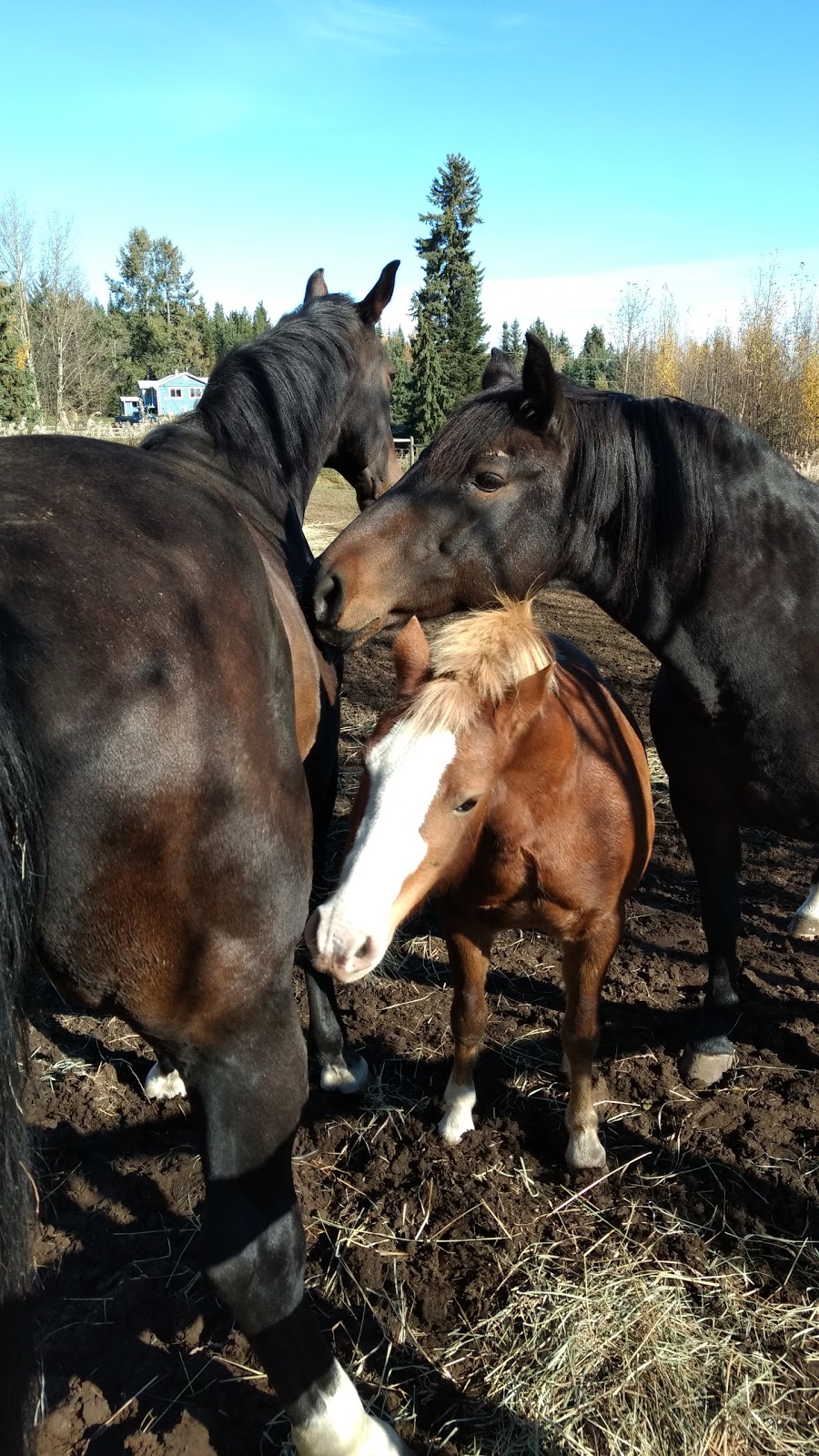
The horses are all doing well. The two new horses: Lola (11.3 hand pony) is going to take a lot of work to change a few things: biting kids, running off with kids when being led, running off on the lunge. I think a driving pony would be a good use for her. The other Marigold (new blonde) is doing well. She is filling out and moving quite nicely in the field. She is standing near Gracie who does not seem to appreciate her. But, then Gracie is not feeling too well.
A few studies show that horses can do race training while fed grass and alfalfa mix hay. Last course the studies said the horses needed grain in order to have the speed to race.
Lily is preferring to crib rather than eat. I think that is where some of her back issues come from. Not enough riding to stretch the muscles so they stay contracted from the cribbing. She is working out as a lunge horse. Her canter is slowing and she is able to maintain it longer. I see the effort that it takes to canter mulitple circles on the lunge, slowly. We are looking for a more collected canter. Maybe by spring she will be able to do it. She is 16 year old this year. Miss July will be our walk, trot horse as she is excellent for beginners. Maybe a bit too forgiving. I think that is the draft in her that makes her so tolerant of discomfort.
Marigold will continue to stand around and eat. She will come in for some alfalfa and to be accustomed to being in the barn. She is barely 2 years old.
Stuart is looking very nice from his work to become a vaulting horse. I am hoping he becomes the canter horse. He seems to enjoy the work. I have a local girl on him. She is learning the "English" way of doing things too. Fortunately she is a fast learner. Last week we rode outside to do hillwork. She immediately went up the steepest hills. He was so willing. Very nice horse. I have started riding him a bit. I think I should ride him more often. He needs to security, not to say the added suppleness from being ridden.
The manure pile is almost all spread on the fields. Hopefully there will be grass growing in the spring as a result. It is going onto the South Field.
I have decided to make signs for the fields. I found some nice plywood that would make good signage material.
The horses are all doing well. The two new horses: Lola (11.3 hand pony) is going to take a lot of work to change a few things: biting kids, running off with kids when being led, running off on the lunge. I think a driving pony would be a good use for her. The other Marigold (new blonde) is doing well. She is filling out and moving quite nicely in the field. She is standing near Gracie who does not seem to appreciate her. But, then Gracie is not feeling too well.
A few studies show that horses can do race training while fed grass and alfalfa mix hay. Last course the studies said the horses needed grain in order to have the speed to race.
Lily is preferring to crib rather than eat. I think that is where some of her back issues come from. Not enough riding to stretch the muscles so they stay contracted from the cribbing. She is working out as a lunge horse. Her canter is slowing and she is able to maintain it longer. I see the effort that it takes to canter mulitple circles on the lunge, slowly. We are looking for a more collected canter. Maybe by spring she will be able to do it. She is 16 year old this year. Miss July will be our walk, trot horse as she is excellent for beginners. Maybe a bit too forgiving. I think that is the draft in her that makes her so tolerant of discomfort.
Marigold will continue to stand around and eat. She will come in for some alfalfa and to be accustomed to being in the barn. She is barely 2 years old.
Stuart is looking very nice from his work to become a vaulting horse. I am hoping he becomes the canter horse. He seems to enjoy the work. I have a local girl on him. She is learning the "English" way of doing things too. Fortunately she is a fast learner. Last week we rode outside to do hillwork. She immediately went up the steepest hills. He was so willing. Very nice horse. I have started riding him a bit. I think I should ride him more often. He needs to security, not to say the added suppleness from being ridden.
photos
Wednesday, 6 July 2016
Collection: from replly to Martin Black when he said a bucking horse is collected, a cutting horse is collected
Classical dressage evolved from cavalry movements and training for the battlefield, and has since developed into the competitive dressage seen today. Classical riding is the art of riding in harmony with, rather than against, the horse.
Correct classical riding only occurs when the rider has a good seat and a correct and well-balanced body position, moves with the horse's motion, and gives and times the aids correctly.
This natural ability to collect is visible in every horse of any breed, and probably inspired early trainers to reproduce that kind of behavior in more controlled circumstances. This origin also points out why, according to most Classical dressage trainers, every healthy horse, regardless of its breed, can perform classical dressage movements, including the Haute Ecole jumps, or Airs above the ground, even though it may perform them a little differently from the ideal performance due to the build of its body.
The ultimate goal of dressage training is to develop a horse to its ability as an athlete: maximum performance with a minimum of effort. The training scale (as set for in the German riding instruction) is to physically develop the horse in a consistent manner with longevity in mind. Dressage is fitness training and needs to be treated as such, with thought, compassion and patience.
Collected paces: walk, trot, canter: show more cadence in the horse's stride, but the same rhythm and the same tempo.
Every horse will have a slightly different collected pace. Not all horses collect well (basically the horse either collects or shows great extravagence in his/her paces). Usually a collected horse will not track up. The long strided horse will have amazing extensions (if riding correctly, etc etc). An incorrectly schooled horse will not collect, truly.
The ultimate collection at walk is collected walk: horse may not track up, or will track up if very long strided. A rider must be careful teaching the collected walk as a good walk is easy to lose. A pacing or lateral walk is then seen.
A judge will know the true extent of a horse's walk when the horse walks out of the arena on a loose or long rein at the end of the test. The horse will be very relaxed (as the rider is thankful it is over and is relaxed).
The ultimate collected trot is the passage (trotting forward in slow motion) and piaffe (trot on the spot without moving forward or backwards..very bad). It is wonderful to ride a piaffe and passage. It takes core strength.
The collected canter is also wonderful to ride. The power of the canter is directed up (as in the other paces) but you really feel the up. The horse's hindleg will not come under the rider's seat.
The degree of collection depends on the training of the horse. Most young dressage horses are 9 when they compete in Grand Prix dressage. That is after 4 years of serious work. The 9 year old is not really competitive at a top level at that age. The horse is not strong enough, experienced enough.
It takes strength and suppleness to be really collected (like a Grand prix dressage horse) so sthe hrose is worked over the 4 years (from 6 on) to be able to do collection.. Like a weight lifter has to work to be able to lift great weights or a dancer dances for years to achieve great leaps.
A talented horse still has to have years of work to build up its strength. Otherwise he will break down.
Terms.
tempo: how fast the rhythm is rhythm: the beats eg walk is 4 beat, cadence: air time , verticality of the steps
Americans might have a different definitions. (I was at a clinic and an American woman kept correcting the world famous instructor on his teminology use. I trained in Britain so use European terms)
How is collection seen: the hindquarters lower so the hindfeet step under and carry more of the horse's weight. The back rounds up (look behind the saddle) the withers rise, which raises the neck, and then the poll. The poll should be the highest point (a horse worked correctly (classical dressage) will develop a lot of muscles on the top of the neck, wither area, back and hindquarters. The barrel in the flank gets rounder too. Some horses develop a lot of muscle along the crest of the neck which may even make the poll look lower (the Baroque horse tend to do this a lot, TB a lot less). There will be no under the neck bulge. The whole topline of the horse should have an upward bow.
Ray Hunt threw horses. Horse think they are dead when you throw them. Like chickens on their back…they quit struggling. Gross. It that what you want in a partner? Total obedience and subervience? Classical dressage trainers do not throw their horses, not do the others, I am sure.
I would use another word than "collection" for what you mean. It doesn't follow the classical terminology. Western riders have other terms for trot and canter which is good. They are not the same as in classical dressage…
Some people to read:
- Alois Podhajsky (1898–1973): became director of the Spanish Riding School in 1939; his books in English translation form the basis of Classical Dressage today My Horses My Teachers is interesting, The Complete Training of Horse and Rider is a bible He is the Captain that saved the Lipizzaners from the Russians…if you have every seen Disney's Miracle of the White Stallions.
- Egon von Neindorff (1923–2004): author of The Art of Classical Horsemanship
- Alois Podhajsky (1898–1973): became director of the Spanish Riding School in 1939; his books in English translation form the basis of Classical Dressage today
- Egon von Neindorff (dressage) (1923–2004): author of The Art of Classical Horsemanship
Arthus Kottos, form Chief Rider of the Spanish Riding School has dvds and books out and does clinics in North America
Conrad Schumacher
From Wikipedia on Classical dressage: collection
This natural ability to collect is visible in every horse of any breed, and probably inspired early trainers to reproduce that kind of behavior in more controlled circumstances. This origin also points out why, according to most Classical dressage trainers, every healthy horse, regardless of its breed, can perform classical dressage movements, including the Haute Ecole jumps, or Airs above the ground, even though it may perform them a little differently from the ideal performance due to the build of its body.
The ultimate goal of dressage training is to develop a horse to its ability as an athlete: maximum performance with a minimum of effort. The training scale (as set for in the German riding instruction) is to physically develop the horse in a consistent manner with longevity in mind. Dressage is fitness training and needs to be treated as such, with thought, compassion and patience.
Why is a Happy Horse Important?
Does it really make a difference if your horse is happy in his work/life or not? If you cannot decide (or no opinion) Aske the question of yourself: Does it really mattter if I am happy in my life or or work?
The answer is "yes". It does matter. Unhappiness affects your health, your relationships..basically everything to do with you. So the same goes for your horse. A happy horse is interested in what goes on around him. He enjoys being with you. He is fun to work with. and he makes you happy to be with him.
Detecting whether your horse is happy or not is not as easy with people. Or maybe it is easier? Depends on how well you read body language. If you have been around people for a while you know it is more important to read the body language not their voice or, especially, what the person is saying.
A person can say what she thinks you want to hear or what she thinks is the truth, but is maynot be true. A person can say she is "happy", smile, but shake her head. Watch what she does. Of course you need to know what a happy person looks like.
What does a happy horse look like?
The horse:
• makes eye contact with you
• approaches you
> big soft eye
The answer is "yes". It does matter. Unhappiness affects your health, your relationships..basically everything to do with you. So the same goes for your horse. A happy horse is interested in what goes on around him. He enjoys being with you. He is fun to work with. and he makes you happy to be with him.
Detecting whether your horse is happy or not is not as easy with people. Or maybe it is easier? Depends on how well you read body language. If you have been around people for a while you know it is more important to read the body language not their voice or, especially, what the person is saying.
A person can say what she thinks you want to hear or what she thinks is the truth, but is maynot be true. A person can say she is "happy", smile, but shake her head. Watch what she does. Of course you need to know what a happy person looks like.
What does a happy horse look like?
The horse:
• makes eye contact with you
• approaches you
> big soft eye
* relaxed muscles
head about poll level
ears move
ears no pricked and held forward
watches you
tail soft
more information
TRTmethod.com. Tristan Tucker. on YouTube also
"Unleashing Harmony:The Man Who Dances With Horses" on Slice Wild on YouTube. (Frederik Pignon)
Subscribe to:
Posts (Atom)